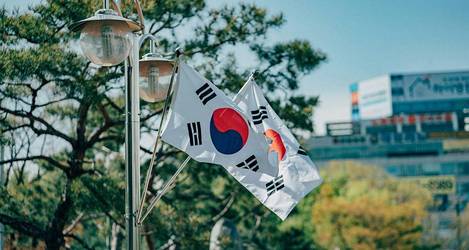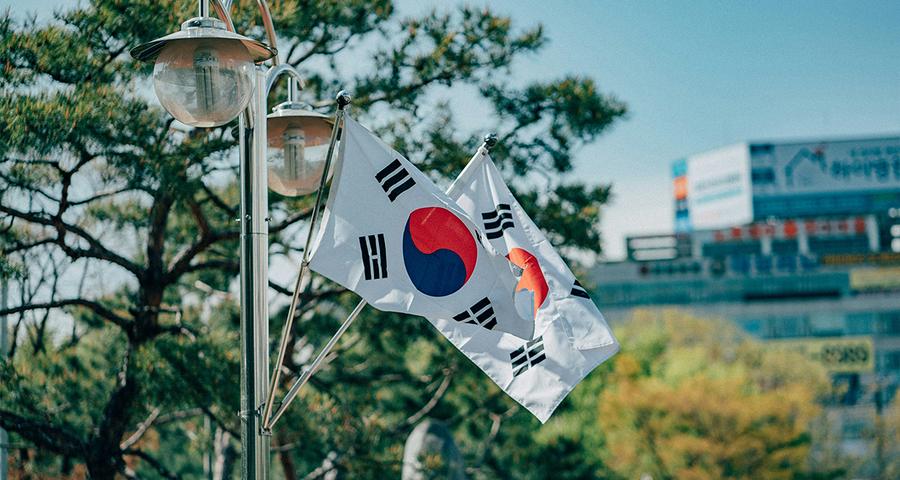
As global allocators recalibrate portfolios for a structurally higher interest rate environment and a massive, hardware-driven artificial intelligence super-cycle, one sovereign market is undergoing a fundamental institutional re-rating: South Korea. Long mispriced by international markets due to historical governance structures, Asia’s fourth-largest economy is executing a powerful dual strategy. By combining an absolute global monopoly over next-generation AI hardware with an aggressive, state-backed regulatory overhaul to eliminate the "Korea Discount," Seoul has transformed itself into one of the most compelling high-conviction plays for global capital.
The global investment narrative for 2027 is dominated by a trillion-dollar AI capital expenditure cycle. However, while software applications remain highly fragmented, the physical layer of AI requires specialised, high-end hardware that can only be manufactured in a handful of places worldwide. South Korea sits at the absolute epicentre of this bottleneck. South Korean semiconductor giants command a near-monopoly on High Bandwidth Memory (HBM), the ultra-fast chips essential for powering AI accelerators. As demand for processing power scales exponentially, the country’s tech infrastructure is capturing the lion's share of international B2B tech spending. Backed by over $470 billion in public-private investments, South Korea is constructing the world’s largest semiconductor mega-cluster outside Seoul, offering real estate, logistics, and private equity investors a multi-decade growth runway. Furthermore, as Western capital seeks to insulate tech supply chains from geopolitical flashpoints, South Korea’s highly stable, sophisticated manufacturing ecosystem has become the premier alternative for sovereign and institutional tech deployment.
Historically, international asset managers applied a structural discount to South Korean equities, citing low dividend payouts, complex cross-shareholdings in family-run conglomerates (chaebols), and restrictive capital market regulations. That structural discount is actively being dismantled. Modeled after Japan's highly successful market reforms, Seoul’s Corporate Value-up Program incentivises listed companies to prioritise shareholder returns, boost capital efficiency, and optimise their balance sheets. For foreign investors, this regulatory pivot triggers an immediate double-alpha catalyst, combining corporate earnings growth with structural multiple expansion as cash-rich chaebols rapidly increase stock buybacks and dividend distributions.
To accelerate the influx of foreign capital, the government has aggressively modernised its financial framework to align with global institutional standards. South Korea has permanently extended its foreign exchange trading hours to close long after European and U.S. market openings, a crucial operational shift that drastically reduces transaction costs and hedging friction for international trading desks. Regulatory barriers have also been lowered to allow qualified foreign financial institutions to participate directly in the domestic interbank FX market, eliminating the historic requirement of establishing a localised presence. These structural overhauls are driving South Korea closer to a coveted upgrade to "Developed Market" status in major global bond and equity benchmarks, a move that would automatically trigger tens of billions of dollars in passive institutional inflows.
While semiconductors anchor the macroeconomic thesis, South Korea offers deep liquidity across several high-yielding, non-tech verticals. Outside of computing hardware, South Korean firms dominate the non-China global electric vehicle battery supply chain, partnering directly with major Western automakers to build gigafactories worldwide. South Korea has also emerged as a premier defense exporter to NATO and allied nations, offering high-tech, heavy-industry manufacturing capabilities at a speed and scale that Western defense contractors currently struggle to match. Additionally, utilising its world-class manufacturing precision, the country has built an elite contract development and manufacturing organisation (CDMO) sector, capturing a massive wave of global pharmaceutical outsourcing.
South Korea is transitioning from a cyclical, trade-dependent economy into a highly protected, structurally advanced tech fortress. By pairing its natural monopoly over critical AI hardware with an aggressive commitment to corporate governance reform, the nation offers a unique combination for 2027: the security of a developed, highly liquid market alongside the explosive growth potential of a frontier tech revolution. For global institutional capital, ignoring Seoul is no longer an option.