For more than 25 years, Swisscom, Switzerland’s leading ICT company, has been advancing sustainability across its entire supply chain. These ongoing efforts have once again been recognised by International Investor Magazine, which has honoured Swisscom with the awards “Most Sustainable Telecommunications Company 2026” and “Best Sustainable Digitalisation 2026”.
By 2035, Swisscom aims to achieve net zero greenhouse gas emissions across its entire value chain. The company has reduced direct emissions by over 85% since 1990 by pursuing a consistent sustainability strategy comprising 100% renewable energies, heat pumps, post-consumer recycled plastic (PCR) in Swisscom products, and digitalisation to support environmentally friendly business operations. As a member of the Joint Alliance for Corporate Social Responsibility (JAC), Swisscom has introduced supplier climate programmes to help and encourage its suppliers to reduce the carbon footprint of their products. Their progress is tracked via the digital platform Sweep.
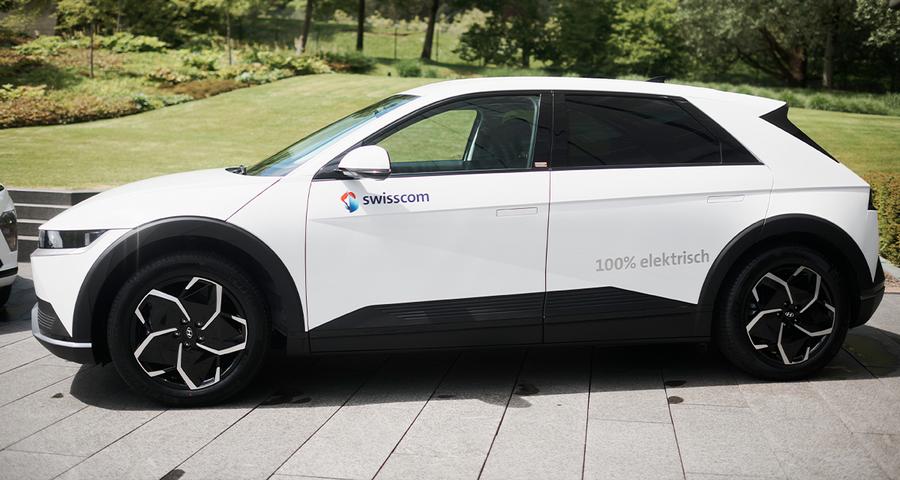
Furthermore, Swisscom is systematically working towards the complete elimination of direct CO₂ emissions from its vehicle fleet by 2030, having already fully electrified its passenger car fleet in 2025.
Saskia Günther, Head of Sustainability at Swisscom, says: “Sustainability is no longer a side project – it is a core driver of long-term business success. By embedding climate and digital responsibility into everything we do, we create value not only for the environment, but also for our customers, partners and society. In 2025 Swisscom extended ist responsibility with a new beyond value chain contribution approach by financing solutions that the world needs to achieve the net zero target of the Paris Climate Agreement.”
Leveraging digitalisation for customer climate protection
Smart applications are the ICT industry’s biggest contribution to climate protection. They are helping to reduce emissions in the fields of building technology, mobility, agriculture and industry, amongst others. Swisscom offers various services in this area. Some help companies reduce business travel, while others encourage the use of climate-friendly, energy-efficient cloud services, for example. Since 2016, Swisscom has been offering IoT (Internet of Things) services to help Swiss companies develop intelligent services, such as remote monitoring systems to save heating energy.
Swisscom’s new data-driven sustainability portfolio has been extended since 2022. Swiss companies are given support in selecting and implementing the most suitable ESG tools for their requirements. These tools professionalise sustainability management and help the companies achieve their ambitious sustainability goals. For guidance, Swisscom published a Sustainability Software Radar, analysing around 250 ESG software providers and their solutions. In 2025 we ran a successful pilot for a platform which simplifies for small SMEs the decarbonisation of their business. Swisscom’s portfolio of environmentally friendly services helped customers to reduce their emissions by more than three million tons of CO2. In 2025.
Media skills for life
Besides its environmental commitments, Swisscom is also committed to getting everyone ready for the digital future by equipping them with the necessary media skills. For many years, the telecommunications company has been working to ensure that the entire Swiss population can take advantage of the opportunities offered by digitalisation – while also raising awareness of possible dangers, such as those posed by cyberbullying. The Swisscom Campus online content hub provides tips and advice on using digital media for children, young people, parents and older people. It also provides a comprehensive education programme with more than 25 different courses covering all areas of digital life. Saskia Günther comments: “In my role as Head of Sustainability and also as a mother of two, I see the importance of strengthening media literacy in society. This is why our explicit goal, by 2030 at the latest, is to support two million people a year in the use of digital media. In 2025, we continued our commitment to media literacy, reaching more than two million people. This was achieved in part through the organisation of parents’ evenings broadcast on television.